
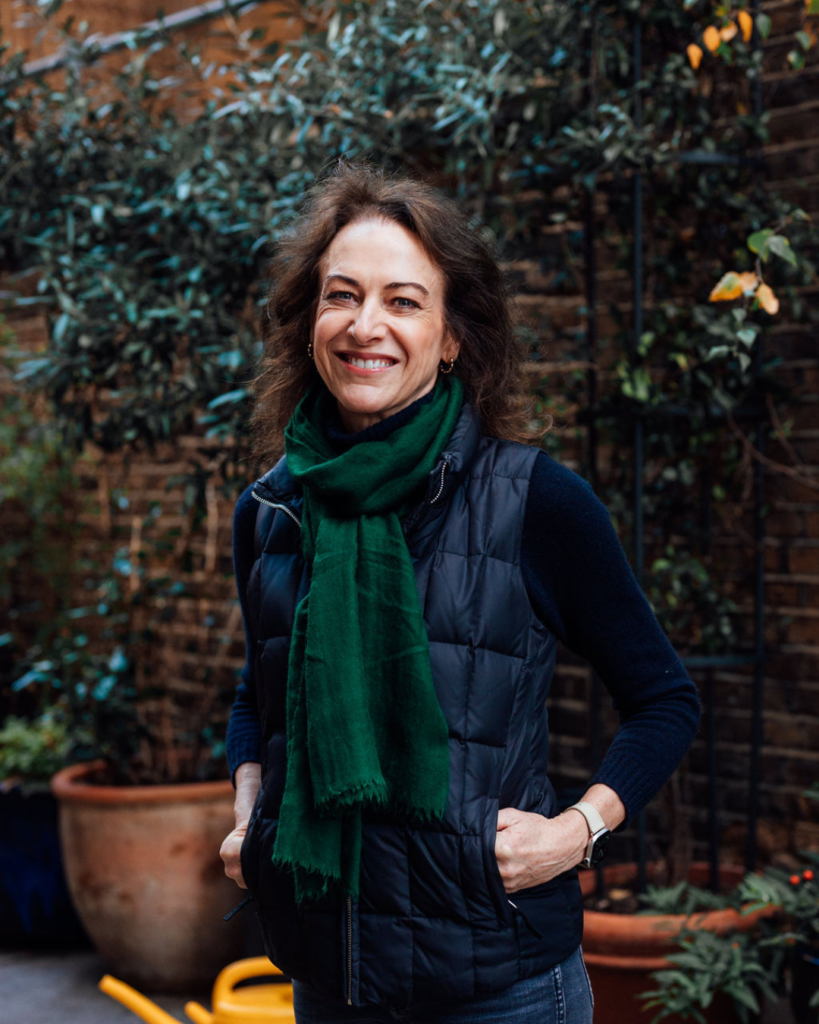
An ambitious idea to green the forgotten and unloved alley, King’s Scholars’ Passage, sits at the heart of Bridget and Sarah’s experience. With the support of the charity The Passage, its clients, and donations from a range of supportive corporates and organisations, they transformed the alley into a hidden garden. Their work speaks to the power of community, rewilding and shared purpose.
For more stories about reclaiming place and community, read Sarah’s account of how the idea for greening King’s Scholars’ Passage began, or explore Nigel’s reflections on shaping and caring for the spaces between buildings. Hear more Voices from the Piazza stories.
The Greening of King’s Scholars’ Passage: A Lockdown Love Story
It was a cold, dark winter’s afternoon in December. One of those London afternoons where everything looks and feels grey. It feels like 9pm, but the clock says just after 3pm and London makes itself just about as unlovable as it can be, when my mobile rang. It was a member of staff at The Passage. There had been some anti-social behaviour in the garden overnight and quite a few plant pots had been smashed, she said.
I ran straight round. We had had experienced this as might be expected in a big city, but this was different. I came to a complete standstill at the top of King’s Scholars’ Passage (which we call KSP) and looked down it. There were about nine or ten pots lying completely smashed, their contents strewn across the road, compost everywhere and plants uprooted. Someone had had a very bad day, and now it was my turn. I felt complete despair. It wasn’t just about all the effort it had taken to fundraise for those pots, but it was all the hours from everyone we had encouraged to get involved to get them planted. I didn’t move, I thought: perhaps the people who had been rather negative about our gardening in central London idea were right, this is just too difficult.
At that exact moment I saw a series of doors open. Staff and clients from The Passage came out of the back of the building, neighbours who’d heard what happened rushed into KSP clutching brooms, the staff at the fast food cafes poked their heads out, everyone was asking what could they do to help, and for a minute I thought John Lewis was filming its Christmas advert.
Back in January 2020, one of the first things that hit me about King’s Scholars’ Passage wasn’t the romantic name – it was the smell. I caught the full bouquet: stale cooking oil from the local takeaways, rubbish blowing in the wind and that distinctive London aroma of wet pavements mixed with regret.
I have lived and worked in this area a very long time, as have many of my neighbours, and anyone who has spent time here knows it’s actually a rather lovely eclectic mix of some of the nation’s historic landmarks, business head offices, charities, coffee shops and a large resident population scattered among them.
I’d like to say I was driven by noble environmental principles, but honestly, I was just tired of living at the back of a street that had fallen into disrepair and was becoming a destination for anti-social behaviour. A few other residents, clearly suffering from similar aesthetic trauma, had the wild idea that we could actually grow some green things in KSP. Real plants, in pots.
The Passage homeless charity has their offices at number 22, and their CEO Mick Clarke was surprisingly enthusiastic about our half-baked scheme and agreed to come to a meeting we arranged with the Council’s planning department. We thought we had everything we needed and would persuade them easily, a couple of women armed with a PowerPoint and an idea to plant up terracotta pots on a backstreet in central London known only for its history of attracting ASB… what could they possibly object to?
The planning officers listened and nodded politely, no-one broke out in fits of laughter, or rolled their eyes, but they did have a few questions and we were left with about 17 action items and a feeling our green dream would drown in a sea of administration, consultations, and stakeholder engagement frameworks… I didn’t actually know what that was but I wrote down “stakeholder engagement framework”, and underlined it.
March 2020 arrived along with Covid and unsurprisingly, everyone at Westminster Council had slightly more pressing concerns such as finding accommodation and food for everyone living on the streets, and our guerrilla gardening ambitions were forgotten. While I absolutely don’t recommend a global pandemic as a project management strategy, in hindsight it turned out to be the best thing that could have happened to our Gardening Project.
Mick Clarke hadn’t thought it was a crazy idea, or if he did, he never said it out loud, or if he said it out loud, he didn’t say it where we could hear him, and gave us permission to make a start.
We started small, ridiculously small, a few pots we had donated after asking friends, family, and neighbours if they had any second-hand pots they no longer wanted. Turns out more people than you think have old terracotta pots lurking in their shed, gathering guilt. We also discovered that there were a number of organizations that actually want to help community projects like ours get off the ground. The RHS for one was extremely supportive with advice and unused plants, but there were several other local businesses, some patrons for The Passage, and a number of local residents all of whom all supported the idea from the start, even though we had almost nothing to show them other than our enthusiasm.
I was very focused on working out how to get hold of plants, compost, and pots. What I didn’t expect was that I, too, would be changed by the experience. The small comments from random passersby who stop to say a kind word when we’re out gardening really means something. Discovering some plant has defied all the odds and decided it quite likes the urban life and has flourished – I didn’t expect I would care, but I do.
I also could not have foreseen how much I’d enjoy getting to know my neighbours and working on this project with the staff and clients of The Passage, but I do. We were incredibly fortunate from the start to meet Vivienne and David, care workers, both of whom put tremendous energy behind bringing their clients to our gardening sessions. Watching these clients, in particular Marcus and Bob, enjoy being around the garden, working alongside them, getting a glimpse of how hard life can be and why someone might become homeless – these were absolutely not on my list of experiences I expected to have or treasure. But I do. Their dedication to turn up each week and do whatever job needed doing was a driving force for us, as was the support from other Passage staff in particular Sceherazade, who very early on gifted us plants from her own garden and Emily, who has found a way to make us financially self-sufficient.
I’ve learnt something about myself: when someone tells me it’s too difficult or can’t be done, I see it as a challenge. I have also learned something about others. Give people a reason to come together as a team, and they surprise you by how quickly they grab the opportunity.
Looking back, I’m staggered by how kind people were. A couple of women armed with a bag of compost and some donated terracotta pots could have been laughed at, but five years on, we’ve managed to green the entire length of KSP, admittedly, it’s not Kew Gardens, but we want to show that this is an area that’s cared for, quirks and all.
If you can green King’s Scholars’ Passage, which, let’s face it is almost entirely concrete, then honestly, you can green anywhere.